
Google Confirms Search Console Indexing Report Delays - No Impact on Crawling or Rankings
Google has officially confirmed a new delay in the Search Console Indexing Report, leaving many site owners, bloggers, and SEO professionals confused about whether their pages are truly being indexed. If you've recently published new content and noticed the "Not Indexed" status lingering for longer than usual, you're not alone.
And the good news?
Google has made it clear: crawling, indexing, and ranking are working normally. Only the reporting inside Search Console is delayed.
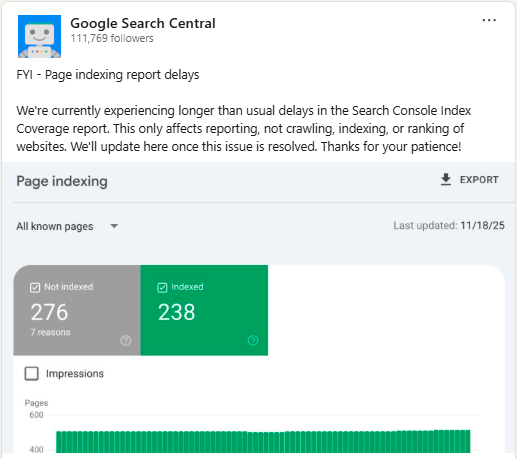
In the screenshot shared by Google (see image above), the company reassures website owners that the delay affects only the Index Coverage report, not actual indexing. While such delays can create temporary confusion, they pose no risk to your site's real SEO performance.
This comprehensive guide breaks down everything you need to know about the update, what you should do, how to verify whether your content is indexed, why the delay is happening, and how to navigate this period confidently.
Let's dive in.
What Happened: Google's Official Announcement
Google has posted an official notice inside Search Console stating that the Indexing Report is experiencing longer-than-normal delays. This report normally tells you which pages of your site are indexed, which are excluded, and why.
When this report is delayed, newer pages might show:
- "Crawled - not indexed"
- "Discovered - not indexed"
- Or may not show up at all in Index Coverage
This often leads site owners to assume Google hasn't indexed the content, even though indexing might have already happened.
What Google clarified
According to Google:
- The delay is only in reporting, not in actual indexing.
- Crawling, indexing, and ranking pipelines continue to work.
- There is no need to resubmit pages, fetch as Google, or panic.
Google has experienced similar reporting interruptions many times in the past, making this update neither unusual nor harmful to your SEO.
What an "Indexing Report Delay" Actually Means
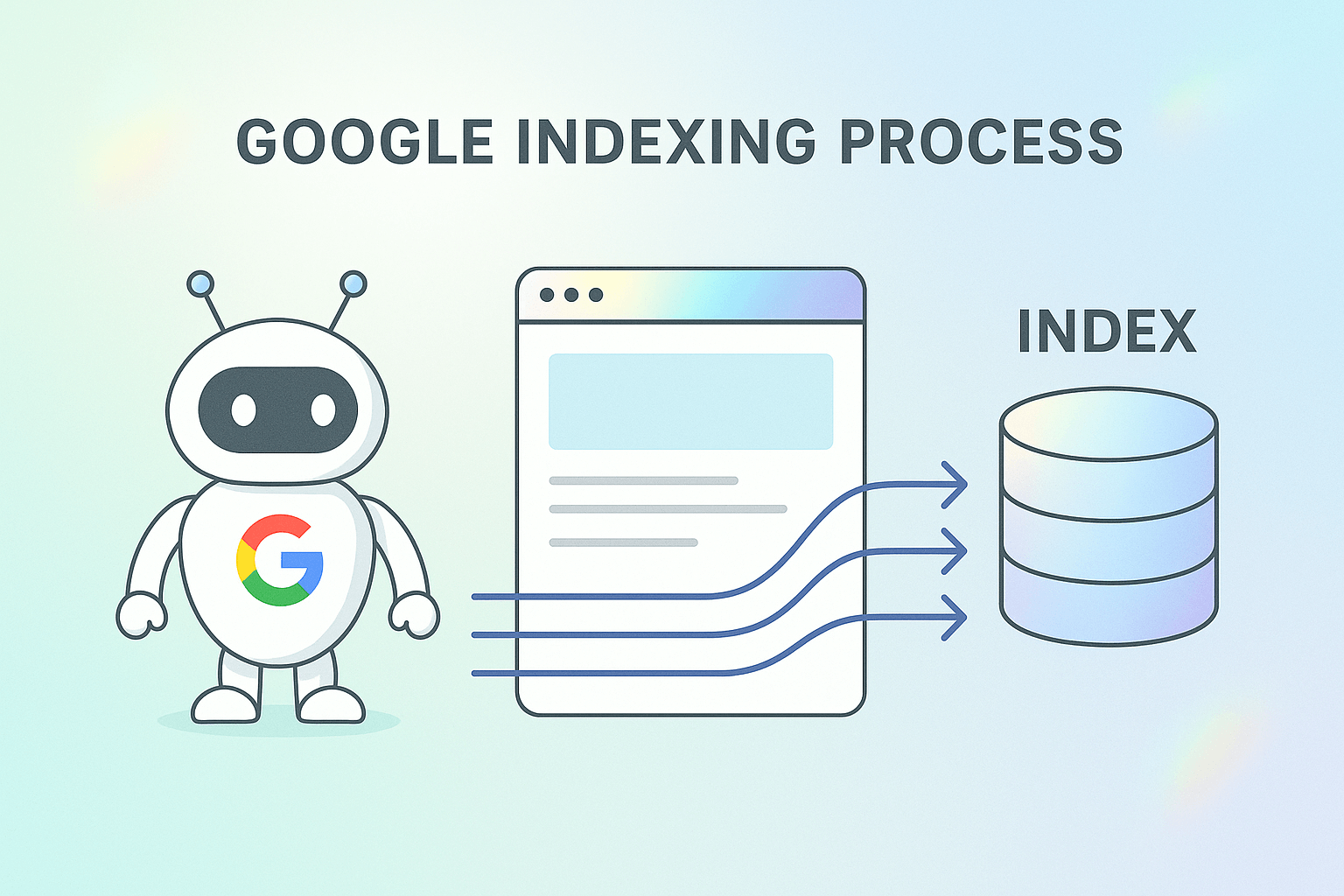
To understand this event clearly, we need to differentiate between two things:
- Real indexing, where Googlebot crawls and stores your page in its search index.
- Search Console reporting, which is simply a user-friendly dashboard showing you the indexing status.
These are not the same system.
Even if reporting is slow, the indexing pipeline continues uninterrupted.
Think of it like shipment tracking:
Your package might already be on the truck, but the tracking status hasn't updated yet.
That's what's happening in Search Console.
Why the delay happens
While Google doesn't always share technical details, common causes include:
- Large-scale index data processing
- Internal reporting system maintenance
- Increased website publishing activity
- Temporary bugs
- Data center syncing lag
These delays happen a few times every year, and Google rarely gives exact timelines for fixes.
Why This Delay Causes Confusion for SEO Professionals
For most SEOs, GSC is the first place they check after publishing new content. So when a report shows no indexing updates for several days, panic kicks in.
Common worries include:
- "Did Google not crawl my page?"
- "Is there something wrong with my sitemap?"
- "Is my domain penalized?"
- "Did I publish at a bad time?"
- "Is my website too slow?"
But during a reporting delay, none of these concerns apply.
The truth:
If your website is healthy, crawlable, and optimized, your pages may already be indexed even though Search Console is slow to reflect it.
During delays like this, it's critical not to misinterpret outdated data.
Understanding How Long Indexing Usually Takes
Under normal conditions, Google indexing speed varies depending on:
- Crawl budget
- Domain authority
- Internal linking
- Website speed
- Sitemap submission quality
- Content relevance
New blog posts are often indexed:
- Within minutes on high-authority sites
- Within hours for regularly updated blogs
- Within 1-3 days for small websites
- Up to 1-2 weeks for brand-new sites
This delay in Search Console reporting does not change the actual indexing timeline.
Tip: Improve indexing speed with strong internal linking
To strengthen your site structure, add internal links to authoritative resources such as:
These internal signals help Google understand your content faster.
How to Verify Real Indexing When Search Console Is Delayed
Since GSC is unreliable during this period, here are accurate ways to check if your page is already indexed.
1. Use a site: search operator
Go to Google and type:
site:yourdomain.com/page-url
If it appears in search results, it is indexed, even if Search Console hasn't updated.
2. Search your page title on Google
Sometimes Google indexes the page but not the exact URL query.
Searching the title will reveal it if indexed.
3. Check server logs
If you know how to read logs, verify if Googlebot visited your URL.
A bot visit often means indexing is already done.
4. Use SEO Site Checker tools
Tools such as:
help you confirm SEO health and discover coverage issues that could affect indexing later.
What SEOs, Bloggers, and Webmasters Should Do Right Now
When Search Console is delayed, the best approach is staying calm and following best practices.
Do NOT:
- Repeatedly request indexing
- Delete and republish pages
- Change URLs
- Edit content aggressively
- Assume Google is ignoring your site
- Submit the sitemap multiple times
These panic actions harm SEO more than help.
Instead, DO this:
✔ Keep publishing quality content
✔ Strengthen internal linking
✔ Submit your sitemap once in GSC
✔ Share your URL on social media (minor crawl boost)
✔ Ensure your website is fast and mobile-friendly
✔ Monitor real traffic through Google Analytics
✔ Focus on E-E-A-T (Experience, Expertise, Authority, Trust)
Keep your content ecosystem healthy, indexing will follow naturally.
Why Google's Indexing Report Gets Delayed
Historically, Google has faced indexing/reporting delays due to:
- Infrastructure updates
- Algorithm refinements
- Activity spikes from global publishing
- Back-end batching cycles
- Data center replication delays
These are internal processes, not indicators of your site's SEO issues.
Google works on enormous indexing pipelines, handling billions of URLs per day. A slowdown in one system (like GSC reports) is normal and expected occasionally.
How This Delay Affects Your Google Rankings
Short answer: It doesn't affect rankings at all.
Here's why:
- Ranking algorithms rely on the live index, not on GSC reporting.
- Search Console is simply a reporting interface, not a ranking system.
- Your pages can still rank, get impressions, and receive traffic even when GSC data is outdated.
If you rely heavily on Search Console for updates, this delay might feel frustrating but from Google's perspective, everything is working smoothly behind the scenes.
How to check ranking performance instead:
Use tools like:
- Google Analytics real-time traffic
- Keyword tracking tools
- SEO Site Checker's SEO tools.
These give you ranking insights without depending on Search Console lag.
When Will Google Fix the Reporting Delay?
Google rarely gives exact timelines.
Historically, similar delays have lasted:
- 2-4 days (most common)
- 1-2 weeks (occasionally)
- Longer during major system updates (rare)
Once fixed:
- The data usually gets updated automatically
- You may see several days of indexing status appear at once
- No action is required from your side
Just keep monitoring, publishing, and improving your site.
Summary & Key Takeaways
Here's what you should remember:
- Google confirmed Search Console Indexing Report delays.
- Crawling and indexing are working normally.
- Ranking is not affected in any way.
- Use
site:search and server logs to verify real indexing. - Avoid resubmitting or making unnecessary changes.
- Keep your website optimized and internally linked.
- Traffic and ranking data remain accurate even when GSC is delayed.
SEO is a long-term game, temporary reporting issues shouldn't disrupt your strategy.
Conclusion
Google's announcement about the Search Console Indexing Report delay has caused understandable confusion across the SEO community. But the reassurance is clear: your rankings, crawling, and indexing are perfectly safe.
These reporting delays happen from time to time, and the best strategy is to continue publishing quality content, maintain your internal linking structure using helpful resources like Dev Dominion tools, and verify real indexing manually when necessary.
Your site's performance is not at risk, only the display of data in GSC is temporarily lagging.


